The
Rob Cook Interview by Winnie Mensink
Neu Isenburg, Germany
march 2002.
WM:
You
have been doing a lot in the vintage drum world. Writing books about
Rogers, Ludwig, Slingerland, reprints of old catalogs. You have the
Rebeats website,calfskin heads. How come you started with all this?
RC:
'I
started in business in '72. It was mainly a bookstore with a music affiliation
that grew into a music store. I specialized in drums and sound equipment.
There was kind of a economic disaster probably worldwide but I only
know it from the USA in the early eighties, 1983 oil embargo. The US
economy had tremendous problems. Petroleumbased products in particular.
The inflation took the price way high, drum heads, drumcoverings etc.
So my drumsales plumeted, people didn't have as much money. Prices going
up. I kind a needed something to make up for those lost sales.
Another
factor, two other factors, one was, increased competition from mailorder
and larger stores, those were trends that were starting to also hurt.The
other thing was, I had a lot of old drums that'd been piling up that
I'd been taken in trade for years I didn't want to just throw away,
'cause I knew they were worth something. But finally, all those things
combined I decided to look into what excactly those were worth. Well,
I didn't want just take them to an expert and get appriasels. I wanted
to educate myself on exactly what they were worth.
So
I decided to make a project out of it and help others that were in my
same situation. So, the result was, my first video, 'Introduction to
Vintage Drums'. Fortunately for me all the experts that I contacted
were very gracious and agreed to talk to me at no costs, just on a royalty
basis. And I went to visit Harry Cangany of the Drum Center of Indianapolis,
John Aldridge of Not So Modern Drummer, Bill Ludwig at his home in suburban
Chicago, as well as Ned Ingberman at Vintage Drum Center in Iowa and
David Bosier in Iowa.
I
didn't have a plan. There was no, what they call, uh, storycards laid
out, no outline.('cause I was ignorant). I just asked every question
I could think of and we took pictures of every drum that these people
had. Then I sat down to digest everything that they had told me and
try to arrange that video so that it kind of made sense. That was basically
it.
As
I researched the video I came across a bunch of the personal archives
of a man named George Way, who had been very important in the American
drum industry in the early part of the century. Well that involved letters,
catalogs all kinds of materials that gave me raw material to start the
Leedy book, which was my first major projekt.
After
I had the video and the Leedy book I had to advertise and promote those
products. I mailordered them, sold them at drum shows. But of course
once my costumers had these two products, I had nothing more to sell
them. So one thing led to another, I would buy and sell a few drums
but I continued make these products. Rather than wait for somebody else
to do them, at the same time I was building a business that would be
immuun to competition. I didn't want to start buying and selling vintagedrums
and help, develop the interest in them just to have someone with much
more money than myself, come and see oh there's a way to make a profit
and put me out of bizzness. So I thought if I'm producing the
products and there's more interest in this field they'll buy those products
from and I'll be ahead either way.
So,
that's pretty much the way it has worked. Except I still need more products
so if other people can bring me manuscripts and so on then we can get
more books published more quickly. We are looking at several others
like one man's doctoral thesis and the history of a particular instrument.
Another man has written the History of Mallet Instruments, one of my
German friend's has written the history of Sonor. Hopefully we get some
of these other projects going in addition to my own. In the meantime
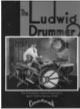
we've published Autobiografy of W.F.Ludwig II, and I'm working on The
Ludwig Book.'
That
will be out this summer?
'Hopefully
by late summer, yes, I suffered a couple of setbacks but the raw material
is pretty much in place and it's a matter of getting the time to get
the page lay-out together and the finalll.......'
Will
that be the ultimate Ludwig Book?
'To
date, and I don't can see of anyone doing it more thoroughly anytime,
real soon anyhow. We're trying to find every detail we can in terms
of every color every strainer every catalog, snare that was a regular
production item. So that people can refer to it as an kind of encyclopedean
guide. ... It will hopefully be a fairly thorough encyclopedia.
The
nice thing about doing a book like that with a company that's still
in bussiness is getting their cooperation and help. The Selmer owners
of Ludwig have been very kind in not only distributing Bill's autobiografy
but they will distribute The Ludwig Book. They're also providing a CDrom
that'll go with it that has not only their new products but some of
the advertising posters that had been done in the past, that couldn't
be in the book in full size. And even some audio with the Ludwig family
playing solos.'
That
amazes me in a way because it seems a lot of drumfactories neglect their
heritage. Why?(slightly edited:)
'Different
reason for different companies, but it probably all boils down to dollars
in terms of what they percieve is profitable and productive. I personally
diagree with those assesments. I feel that, well let's take the case
of Ludwig. It's going to be in their interest and further profit
to enhance their image by displaying their history and their interest
and pride in it.
But
on the other hand the reality is there are a couple of people that work
there that agree with me but they're just employers of a large corporation.
I forget their sales rank it's quite high. The numbers are even public
information. If you do a computersearch, a Googlesearch and type in
Selmer, very soon you can get to their financial information. That website
will be identified the book. Quite interesting, it lists all the
corporate officers and how much stock they have. And you can see on
that site that the current president of Ludwig owns a certain amount
of stock but the owners, who are a couple of smart young business men,
also own Steinway, I think Gemeinhardt although I probably shouldn't
say that not knowing, but obviously Selmer and some reed companies and
mouthpieces. So Ludwig is a small portion of what they do, they're willing
to entertain a certain number of proposals from the Ludwig division,
but in terms of devoting major promotional expense to it.....'
Is
it like the same history repeats itself with CBS and Rogers?
'Somewhat
but hopefully it won't go that far because, there are some striking
parallels when you look at what happened to Slingerland, and to Camco,
to Ludwig, as they were bought and sold in times that were getting kind
of rocky for American manufactures partly due to economy mainly because
of imported goods. But the main common theme that was really a crushing
disaster to them was their ownership by larger corporations that kept
them from becoming competitive with those other companies by shifting
their production overseas and so on.
Again
I guess the case in point is Ludwig because it's freshest in my mind.
But, Frank Baxpehler is a very sharp man of German nationality originally.
He moved to the US as a young man to go to collage in the US, became
the export manager for Ludwig and when he saw those changes coming,
he submitted proposals for offshore production that would have kept
Ludwig in line and competitive. But the choice was made to be happy
with what sales they had and not to try to expend the market and to
not replace equipment and tooling that was getting worn and was making
production more difficult.
Which
is exactly what was happening with Slingerland and their tooling. As
a division of CCM, Crowell, Collier & McMillan publishing company,
they just couldn't get any approval for new moulds or anything.
It was increasingly difficult to make even acceptable product. Let alone
compete with the new products. They were kind of victims of corporate
disinterest and mismanagement.'
Earlier
on we were talking about the biggest mistakes in drumhistory.
'I
was thinking about that last night. And it occured to me they almost
all fall into different catagory. There have been so many monumental
mistakes. One whole catagory is misjudging the potential of an instrument
that eventualy becomes succesfull. And the other catagory of course
products which never had any change of succes and were actually patented
anyhow.'
Knob-Tension
Leedy-Ludwig?
'Even
worse than that. I have some patents for things like a sheet metal drumhead.
You have to wonder if that was a good idea. And it's amazing that somebody
took that idea as far as to actually get a patent on it. A Sheet Metal
Drumhead! It had it's advantages in days of calfskin I suppose. (Sarcastical
laugh) It's easy for us to laugh now. In the other catagory the two
of it that really come to mind are the brass snaredrum that William Ludwig
was just certain was the sound he wanted. I mean he had heard the drum,
he had played the drum he wanted to use that drum he finally obtained
it and went to Leedy to copy it and wanted Leedy to produce the drum.'
That
was in 19...?
'That
would have been 1908 or 1909 or so and Leedy was huge at that time and
Ludwig had started his shop making pedals and had a drumshop but as
far as material items other than the pedal he was selling Leedy products
so it was natural for him to go Leedy and say here's the product I want.
Well Leedy disagreed and felt that was inappropriate material for a
snaredrum. That was the mistake.
brass instead of wood?
Yeah,
he felt wood was the only acceptable material for a snaredrum and that
was it. So that was his error. Well one of his errors the other one
that comes to mind was also his unfortunatly.'
Leedy's?
'I'm
sure many other companies have made huge mistakes but the other mistake
that I know about of H.G.Leedy's was failing to patent an instrument
that became very succesful. A man named Herman
Wintermoet, that was an employe of Leedy's and worked in the malletinstrument
department. He invented the first vibraphone. But it was a long proces.
He had many prototypes, they were noisy, the mechanismes clacked and
he had the correct idea. He had a clear definition in his head and knew
that it would work. But because of his first prototypes being so impractical
and noisy, Mr. Leedy dismissed it as a novelty and having little change
of a commercial succes. So even when they finally did start producing
it as a commercial item he neglected to patent it. Other companies were
free to make it and compete with him and he lost out a tremendous amount
of profit because of that.
It
kind of reminds me ... somewhat of the drumhead situation. The failure
to act in a prudent, legal manner to protect profits. The big litigation
between Ludwig and Slingerland fighting over the plastic drumhead. I
was told by the man who was in charge of Slingerland's drumhead production
at the time and who was president during many of the discussions both
in and out of the courtroom, that if Ludwig and Slingerland had just
gotten together and signing an agreement giving them both legal power
to produce it they could have prevent anyone else from using it without
license and it would have enriched them both tremendously. But it was
more important for both William F.Ludwig Sr. and H.H.Slingerland Sr.
to win a lawsuit than it was to seek an end to the lawsuit. So they
fought untill one won and unfortunatly it resulted in an unprotected
patent and they both lost.'
Is
there an ultimate vintage snaredrum?
'The
Ludwig Supraphonic 400, there's no question in my mind. It's simple,
it's been essentially unchanged in the last forty years, it's the most
recorded SD in history. They always sound great out of the box, that's
my opinion, but there's no arguing with the fact that people like Hal
Blaine have used it on so many songs that it is virtually impossible,
at least in America today, to turn on an oldies station without hearing
the Supraphonic 400, within one or two songs. I'm not a particular fan
of the brass . although since fewer of them were made they seem to be
more in demand.'
The
first early sixties were brass, later Aluminum. You prefer the alloy,
LudAlloy sort of aluminum?
'Yeah,
personally I do. I like the alloy or aluminum shell that depend on who
you talk to, they call it steel or aluminum or alloy, but yeah, that's
the drum that I like personally. And interestingly enough when I asked
Hal Blaine recently about his snaredrums in that era and whether he
used brass or alloy, he didn't know. He said it was a shiny metal drum.
It was almost the same answer Andy Babiuk got in his book on Beatles
gear. When someone asked ... Paul McCartney what brand of bassstrings
he used and he said:'Long Shiny Ones'. Some of the topmusicians of our
times have not been equipment freaks. They were more interested in making
music, that's the same with manufacterers.
Some
of these people that have worked at Ludwig for thirty years you think
know every starwasher that was changed at what date. But they were interested
in getting drums out the door, they wanted to assemble them so they
would hold together and ship 'em and if they found a better way of doing
something they would. If they ran out of parts, they'd use an other
part. But it's up to us to analyze what has been done and guess why
it was done in a certain way. But quite often the people that did it
and the artists that played it, didn't have compelling reasons at the
time.'
Why
do people play and collect vintage drums?
'I
think there are as many reasons as there are people of course but if
I had to sum it up in one general area it would be that a lot of us
are playing drums that were new when we were young. We're used to the
catalogs we have always kind of in the back of our mind admired a certain
color or a certain brand. And now that we see other people with the
similar interest it satifies two desires. There's one is that actual
desire to posess that same drum in that same color. For me it's sometimes
even non-drumrelated. When I played in bands in the sixties and seventies
I always wanted a Super Beatle amp. The big Vox. And I recently had
a chance to get one for, uh you know $300.'
AC30?
'No,
this is the big one, the big Super Beatle. It was very cheap. I just
love it 'cause it was totally unobtainable in those days. No way it
ever would have happened. That's part of it the other half an a very
big part is the whole sense of community. Everyone likes the feeling
of family, of sharing similar interest and when you get a whole bunch
of drum people together even if it's not in person, if it's on the internet
in a forum, you're reaching out, you're establishing a human contact
in an age where people..... some .....the world is smaller all in all
....people travel a lot. There's a lot of family pressures. For all
those reasons it helps to be part of a community with people similar
interest. It satisfing those two desires which speaks poorly to the
quality of the instrument. I don't wanna leave that as a distant third
because there is a unique sound. But, let's face it, not all these drummakers,
even very many of them were probably great artist or craftsmen. They
paid attention, they made good drums but not they're not great works
of art like many of the guitars and violins but, nevertheless it does
all those other things for us.'
There
are a lot of drummers that have these drums for sound.
'Undoubtetly,
it boils down to theplayer again and goes back to that conversation
with Hal Blaine and I have heard Louie Bellson also say: 'Give me a
cheap drum and I'll make it sound good'. There are people that just
have that touch. John Bonham made that Vistalite kit sound great and
I think a lot of other people with that same drumset would sound terrible.
It's kind of a trick to play that 26' plastic bassdrum. Obviously he
did it magnificently, and that's a challenge in the studio.
I
once got a phone call from a studio that Lenny Kravits recorded in extensively
and Lenny was in the studio they wanted a Bonham sound and they wanted
a Supraphonic 402, a 6,5 alloy shell. I was a little perplexed, I don't
know why they called me it seems like those are all over the place.
Someone there knew I had it, they'd had my number, I Fed-exed it to
them and I told them, if it works here's the price, if it doesn't just
send it back. And it came back a week later with no note and I never
did find out what that ment. But I can only presume that the engineers,
the producers or the artist were not able to get John Bonham's sound
with John Bonham's snaredrum.
So,
not always the correct Dyna-Sonic, or whatever, will get you there.
I don't want to slide to the technicians because there are engineers
that can put .. working together. Kind of a three way thing I guess,
the techs, the drummers themselves and the engineers in today's music.
I know Jon Cohan in Boston does a lot of tech-ing and he works nicely
in that kind of picture with helping create a sound. Sometimes again
the drummers are more ..they wanna sit down and put down a groove, they
don't want fiddle with tensioning the heads and changing the heads.'
What
was the most emotional moment in your vintage drum life? Did you break
down in tears over a lost snaredrum?
'Probably,
still the moment that I'll never forget that stands out in my mind it
actually goes back a little bit further but it ties in. And that's with
William F. Ludwig II. I have always been a Ludwig fan my first good
drumset was a ludwig set. It was in Oyster Blue in the Beatle days,
so I tie in with all of that. And Ludwig was, you know to the drum community
what Ford was to the autoworld. And the idea of meeting Henri Ford was
just, you know, absurd. It was almost as absurd to think of meeting
someone like Mr. ludwig. I wrote him a letter about some problems with
my drumset and he personally replied. I was just sixteen years old and
I received a letter from the president of The Company. I was just..
overwhelmed that he would actually write to me, and answer my concerns.
Well
then, years later I was fortunatly enough to get into the business,
and the first time that I was large enough to actually make a contact
with Mr.Ludwig in the form of inviting him to come and give his lecture,
with me as the sponsor. I was very overwhelmed with the prospect of
meeting this man. And everything went pretty well and when it was time
taking him back to the airport he was getting concerned because it was
starting to snow quite hard. He wanted to get to the airport very early
to make sure that we wouldn't have weather problems with his return
to Chicago. So we went to the airport quite early and then he relaxed
because he knew that he was back on schedule so he insisted on taking
me to a dinner in a restaurant at the top of the airport. So, we went
up to this restaurant at the top of the airport terminal and the snow
was floating down like a picture and it was in the evening so it was
nighttime with just beautiful snow drifting down. I'm sitting acros
the table from a man I never dreamed of that I would even have an opportunity
to meet. Sitting there him buying me drinks we both were feeling wonderful
and he was answering all my questions about what life was like for him
back in those days. That's one particular evening that I'll never forget.'
So
it's more the human thing than the drum or whatever?
'Exactly.'
That
makes sense. Thank you Rob!
|